What is a franchise business?
Basics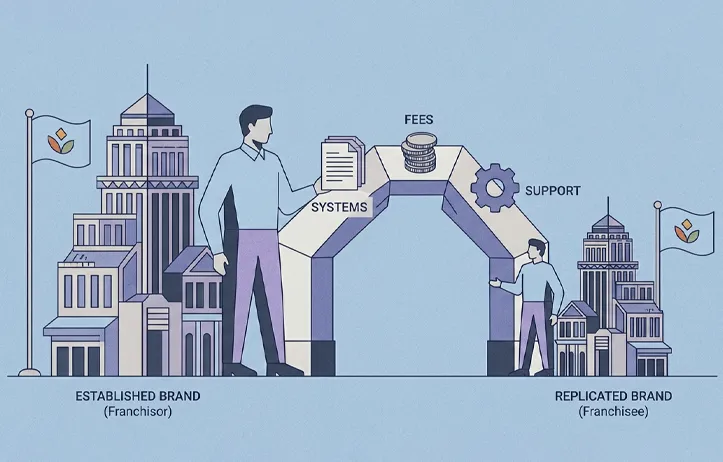
A franchise business is a model where an established brand licenses its systems, processes, and intellectual property to individual operators. Understanding the relationship between franchisor and franchisee is the first step in evaluating whether franchising suits your goals.
Business model structure
Franchising works on a licensor-licensee model. The franchisor provides the brand, systems, and processes while the franchisee pays fees to operate under that brand within agreed terms.
Shared brand standards
Every franchisee operates under the same brand standards to ensure consistency for customers. This means following set procedures for service, presentation, quality, and communication.
Franchise fees and royalties
Franchisees typically pay an upfront fee to secure the licence, then ongoing royalties — often a percentage of revenue — to access continued use of the brand and support services.
Operational support provided
Support can include training, field visits, marketing tools, technology, and supplier access. The depth and practicality of that support varies significantly between systems.
Growth and territory expectations
Some agreements include exclusive territory rights that protect your trading area. Others allow expansion into additional locations under separate agreements once the first is established.
The strongest starting point is clarity. Before reviewing opportunities, make sure you understand how franchise ownership differs from starting an independent business and what obligations come with operating under an existing brand.